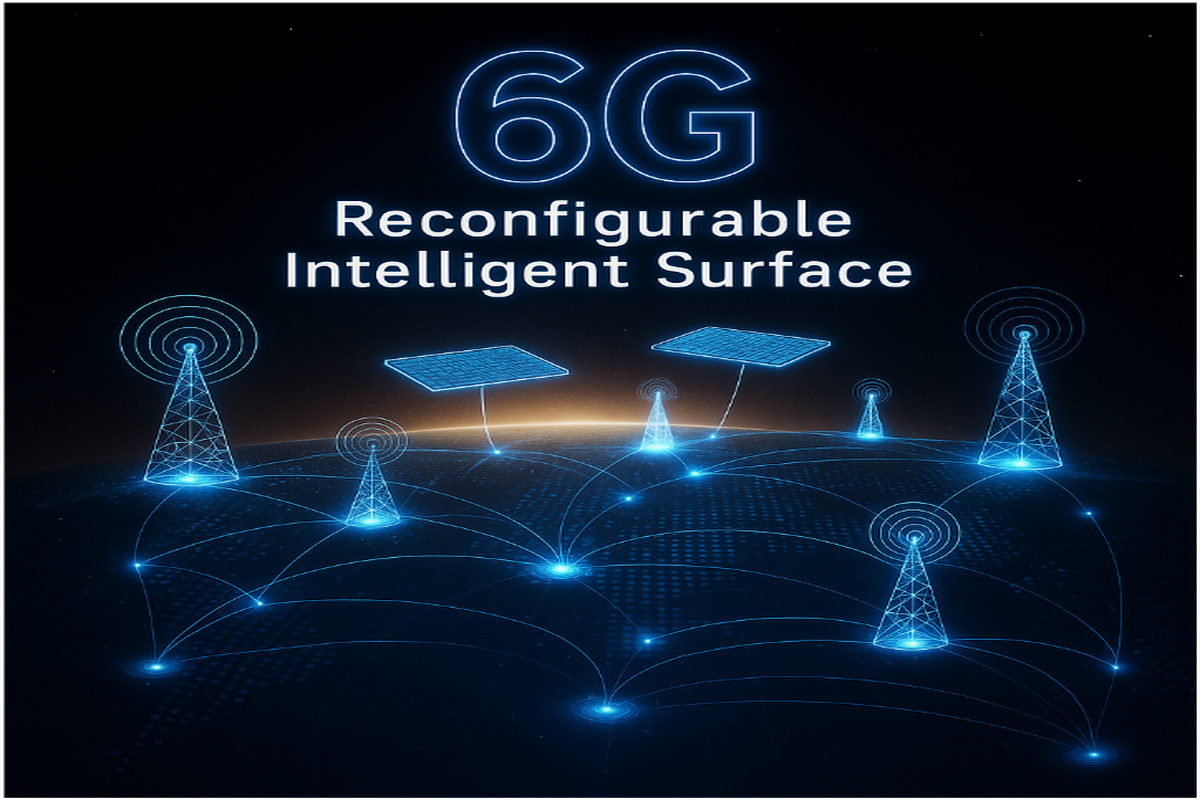
What is a Reconfigurable Intelligent Surface (RIS)?
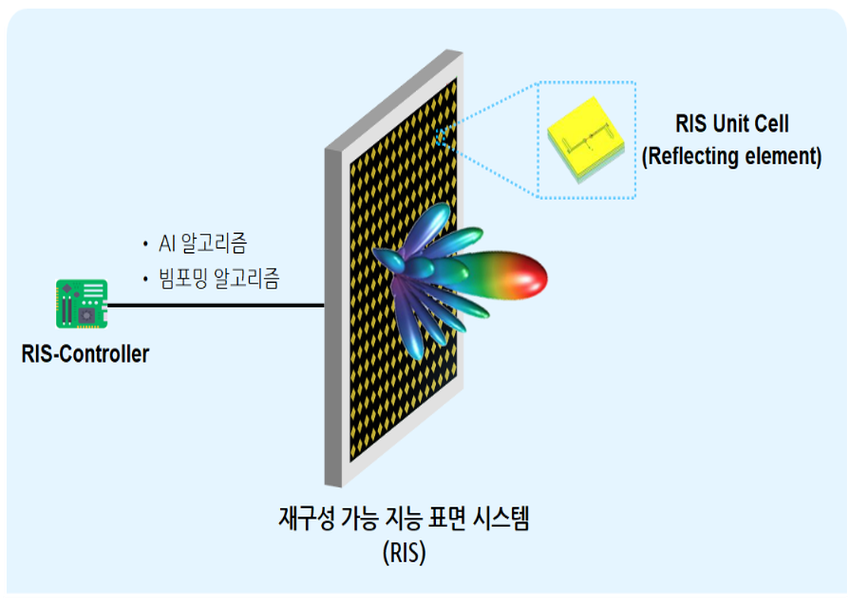
A Reconfigurable Intelligent Surface (RIS) is a technology that electronically controls the phase
and amplitude of a surface composed of many meta-atoms, reshaping the direction and
spatial distribution of electromagnetic waves into a desired form.
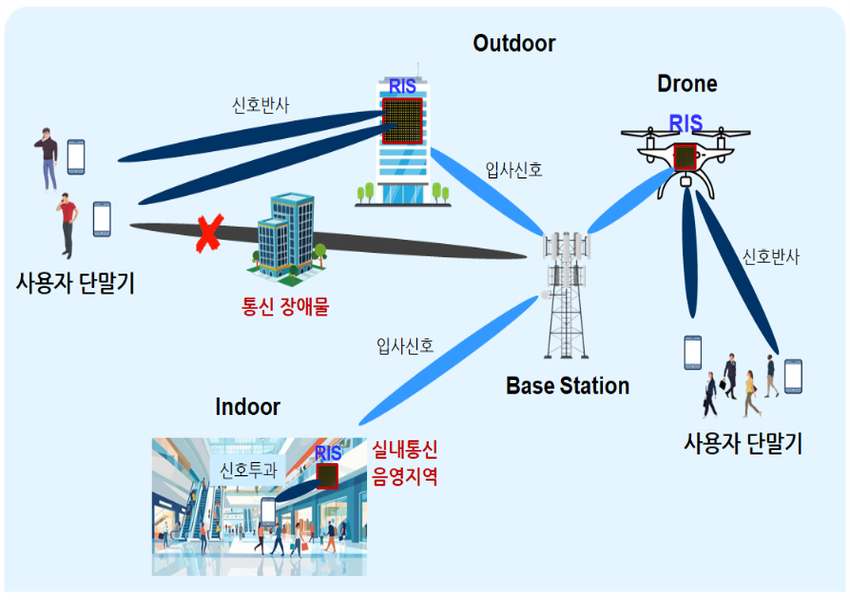
By mounting RIS panels on building facades, indoor ceilings, columns, and other structures,
signals can be reflected,
focused, or redirected—reducing coverage holes and improving
link quality without deploying additional base stations
or repeaters.
- · Fine-grained beamforming through element-level phase control
- · Low-power, cost-effective coverage expansion for B5G/6G networks
- · Easy deployment as panel-type modules across diverse indoor and outdoor environments
MEWLink develops core technologies for future-ready wireless infrastructure through
RIS-based solutions, including Upper mid-band H-RIS.
What problems can Reconfigurable Intelligent Surfaces
(RIS) solve?
RIS helps mitigate challenges in environments where radio signals weaken or break
easily—such as insufficient coverage, reduced throughput, and increased interference.
- · Coverage extension in shadowed areas like alleys, corners, and intersections between buildings
- · Throughput degradation relief in large indoor venues such as airports, exhibition halls, and stadiums
- · Link quality tuning and interference mitigation in specific process zones within factories and
logistics centers
- · Flexible beam-path configuration for disaster response, events, and temporary networks
With proper placement, RIS can reflect, focus, or redirect signals—improving perceived
communication quality without adding extra base stations or repeaters.
MEWLink is researching and developing integrated solutions that combine Upper mid-band H-RIS
and MANET technologies to address these real-world challenges more efficiently.